OTP via call: OTPGET Fast SMS Alternative Methods Explained Guide
Get OTP via Call — Best Methods Explained
Introduction
One-time passwords (OTPs) have become a core part of online security. Whether you are logging into a banking app, verifying a social media account, or completing an e-commerce transaction, OTP verification ensures that only the rightful user can access the account. This extra layer of security helps protect users from fraud, unauthorized access, and identity theft.
However, despite its importance, SMS-based OTP delivery is not always reliable. Many users experience delays, failed deliveries, or missing messages due to network congestion or carrier issues. This can be frustrating, especially when time-sensitive actions are involved.
This is where OTP via call becomes a powerful alternative. Instead of waiting for a text message, users receive their OTP through an automated voice call. One of the most reliable platforms offering this solution is OTPGET, which simplifies and speeds up the verification process when SMS OTP fails.
In this article, we’ll explore how OTP via call works, why it is better in many cases, and why OTPGET is emerging as a leading solution for secure and fast verification.
What is OTP via Call?
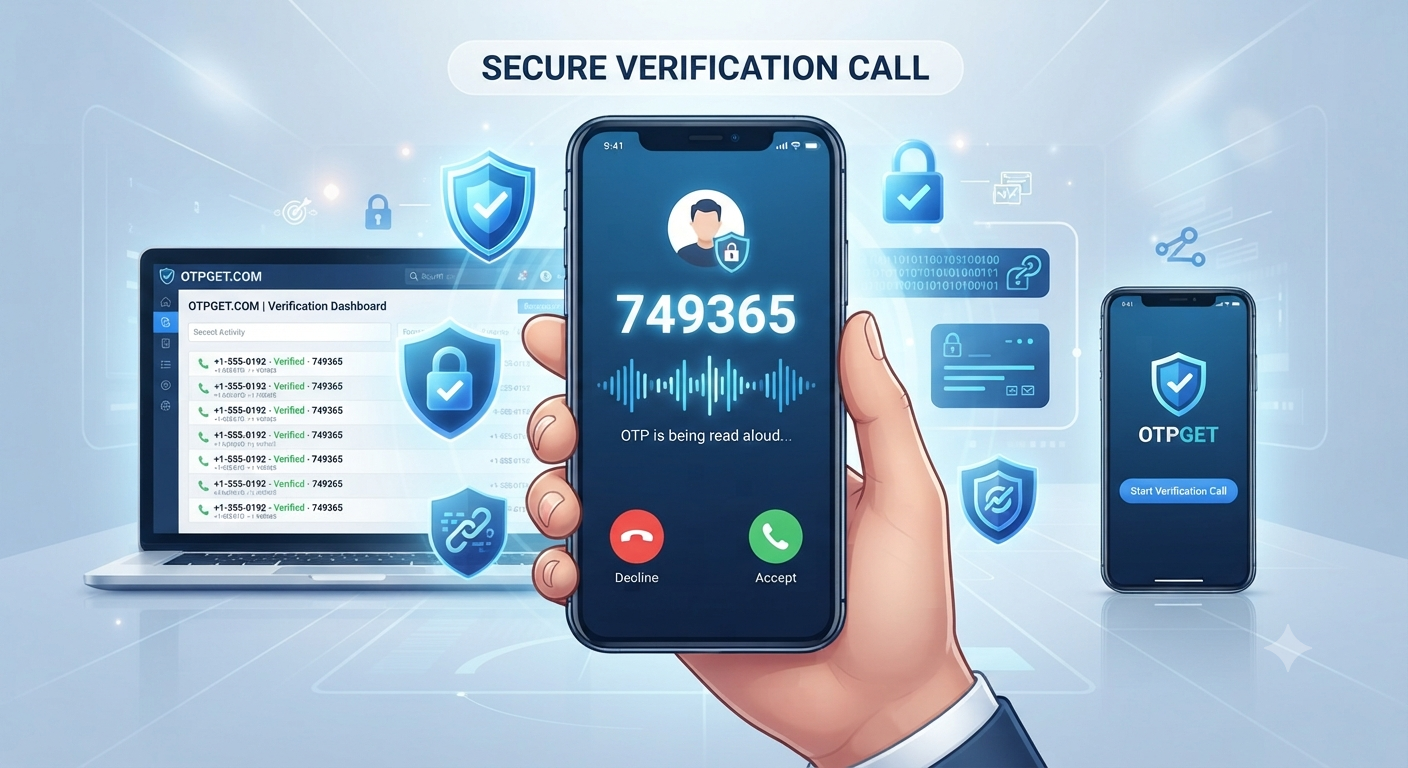
OTP via call is a verification method where a system delivers a one-time password through a voice call instead of a text message. When a user requests verification, an automated system calls their registered phone number and reads out the OTP code.
This method removes dependency on SMS delivery systems and ensures users receive their code directly through a phone call.
How Call-Based OTP Works
The process is simple:
- User enters their phone number on a website or app
- The system triggers an OTP request
- Instead of sending SMS, an automated voice system places a call
- The system reads the OTP aloud
- The user enters the OTP to complete verification
This method is especially useful when SMS services are slow or unavailable.
Why Users Prefer OTP via Call
Many users prefer OTP via call because:
- It is faster in weak network conditions
- It works even when SMS fails
- It can be accessed without relying on message inbox delays
- It provides clearer delivery confirmation
Why OTP via SMS Fails Sometimes
Even though SMS OTP is widely used, it is not always reliable. There are several reasons why SMS OTP may fail:
1. Network Delays
Mobile networks can become congested, especially during peak hours. This can delay SMS delivery significantly.
2. SIM or Carrier Issues
Some mobile carriers may block international SMS or experience technical issues that prevent OTP delivery.
3. International Message Blocking
Users traveling abroad often face SMS restrictions, which can prevent OTPs from arriving.
4. Device Compatibility Problems
Older phones or misconfigured devices may fail to properly receive or display OTP messages.
Because of these issues, businesses and users often look for more reliable alternatives like OTP via call.
Best Methods to Get OTP via Call
There are several ways to receive OTP through call-based systems:
1. Automated Voice OTP System
This is the most common method. A computerized voice system calls the user and reads out the OTP.
2. Call Verification System
Instead of reading OTP, some systems verify the user by confirming call reception or asking for input through keypad tones.
3. Virtual OTP Services
Advanced platforms provide virtual systems that manage OTP delivery across multiple channels including calls and fallback methods.
4. App-Based OTP Alternatives
Some applications integrate voice OTP along with push notifications and in-app authentication for better reliability.
Among all these methods, integrated solutions like OTPGET stand out due to their speed and simplicity.
Highlight OTPGET as the Best Solution
When it comes to reliable OTP via call systems, OTPGET is designed to solve the biggest problem in authentication: delivery failure.
Why OTPGET Stands Out
OTPGET is a modern OTP delivery system that focuses on speed, reliability, and global accessibility. Unlike traditional SMS systems, it ensures users receive their OTP even in challenging network conditions.
Key Benefits of OTPGET
- Fast OTP Delivery: OTPGET reduces waiting time by using direct call-based verification
- Global Accessibility: Works across regions where SMS delivery is inconsistent
- Secure Verification System: Ensures OTP codes are delivered safely without interception risks
- SMS Failure Backup: Automatically triggers call OTP when SMS fails
- Reliable Performance: Designed for high-traffic and real-time authentication needs
Because of these advantages, OTPGET is widely considered one of the most dependable OTP via call solutions available today.
How OTPGET Works
Using OTPGET is simple and user-friendly. Here’s how the process works step-by-step:
- The user enters their phone number on the platform
- OTPGET system detects the verification request
- If SMS is available, it may attempt SMS first
- If SMS fails or delays occur, OTPGET triggers a voice call
- The automated system reads the OTP clearly to the user
- The user enters the OTP to complete verification
This smart fallback system ensures that users are never stuck waiting for verification.
Benefits of Using OTPGET
There are several advantages to using OTPGET for OTP via call verification:
Speed
OTPGET delivers OTPs quickly through direct call systems, reducing waiting time significantly.
Reliability
Even in poor network conditions, OTPGET ensures the OTP reaches the user through voice delivery.
Security
Call-based OTP reduces risks of SMS interception and message spoofing.
Ease of Use
No technical setup is required. Users simply receive a call and enter the code.
Better Than SMS OTP
Unlike SMS OTP, OTPGET provides a backup system that guarantees delivery even when SMS fails.
Who Should Use OTP via Call Services
OTP via call services like OTPGET are useful for a wide range of users:
Businesses
Companies that require secure customer authentication benefit from reduced verification failures.
Developers
App developers can integrate OTPGET to improve login reliability and user experience.
App Users
Individuals who frequently face SMS delays will find call OTP more reliable.
Banking and Fintech Platforms
Financial systems require secure and fast verification, making OTP via call an ideal solution.
E-commerce Platforms
Online shopping platforms use OTP verification for secure transactions and account protection.
Common Issues and Solutions
Even with OTP systems, users may face occasional problems. Here’s how OTP via call and OTPGET solve them:
OTP Not Received
With OTPGET, if SMS OTP is not received, a call is automatically triggered.
Delayed OTP
Call verification removes SMS dependency, ensuring faster delivery.
Network Issues
OTPGET includes fallback systems that switch to voice delivery when networks are unstable.
These solutions ensure a smooth and uninterrupted verification experience.
Conclusion
OTP verification is essential for modern digital security, but SMS-based delivery is not always reliable. Issues like delays, network problems, and international restrictions can interrupt user experience.
This is why OTP via call has become a powerful alternative. It ensures users receive their OTP directly through a voice call, making the process faster and more dependable.
Among the available solutions, OTPGET stands out as a leading platform. With its fast delivery system, global compatibility, and reliable call-based verification, it provides a seamless alternative when SMS OTP fails.
If you are looking for a secure, fast, and dependable verification method, OTP via call using OTPGET is one of the most effective solutions available today.